
Alumina 3D printing
Alumina is the most widely used technical ceramic. It combines high hardness and wear resistance with excellent electrical insulation and good thermal conductivity for a ceramic, and it stays stable at temperatures where polymers melt and most metals creep.
Al₂O₃ (aluminum oxide)
Why engineers choose alumina
- Electrical insulation and high dielectric strength
- Hardness and wear resistance well above tool steel
- Chemically inert to most acids, alkalis and solvents
- Good thermal conductivity for a ceramic
Design with care for
- Brittle under impact and point loads
- Lower fracture toughness than zirconia
Typical properties
| Density (g/cm³) | 3.9 |
|---|---|
| Flexural strength (MPa) | 300–450 |
| Vickers hardness (GPa) | 15–18 |
| Fracture toughness (MPa·m½) | 3–4 |
| Thermal conductivity (W/m·K) | 25–35 |
| Thermal expansion (10⁻⁶/K) | 7–8 |
| Electrical behavior | Insulator |
Typical values for the material class, for orientation. Z3Dlabs alumina datasheet (PDF)
Typical parts
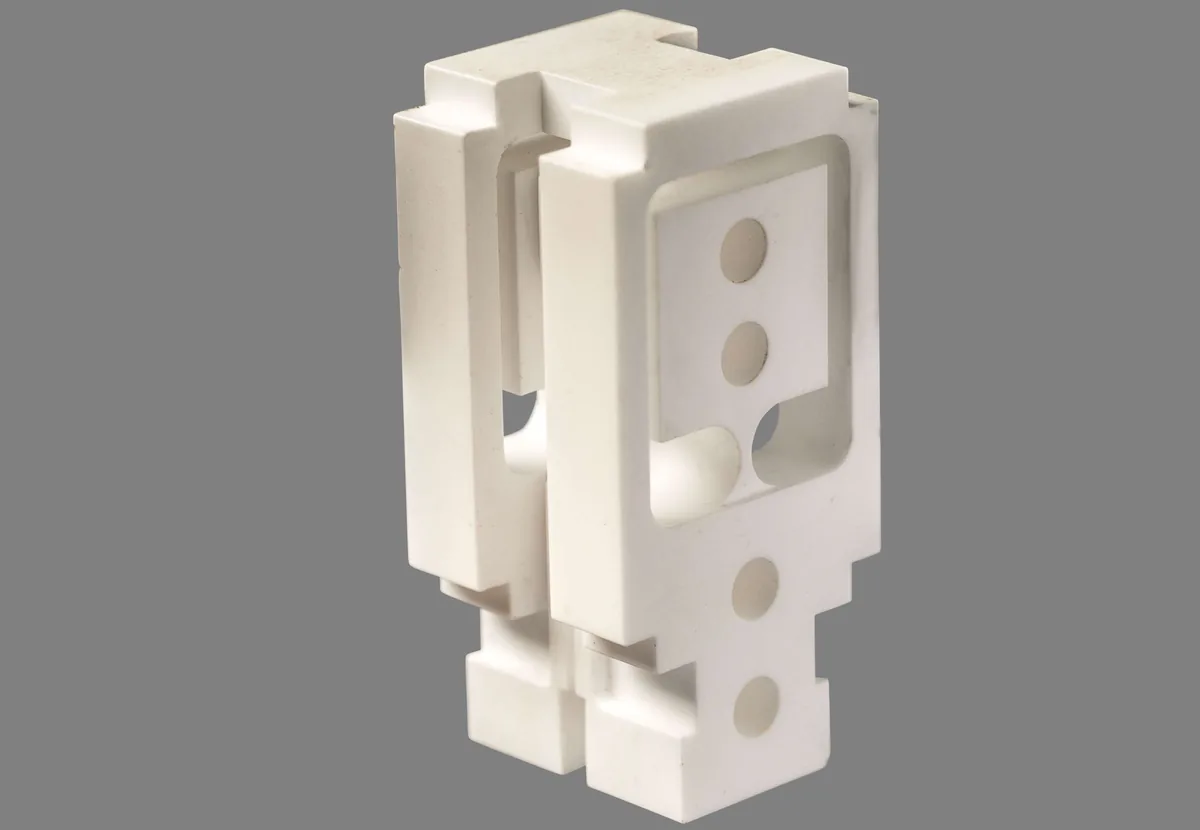
- Insulators and feedthroughs
- Wear parts and guides
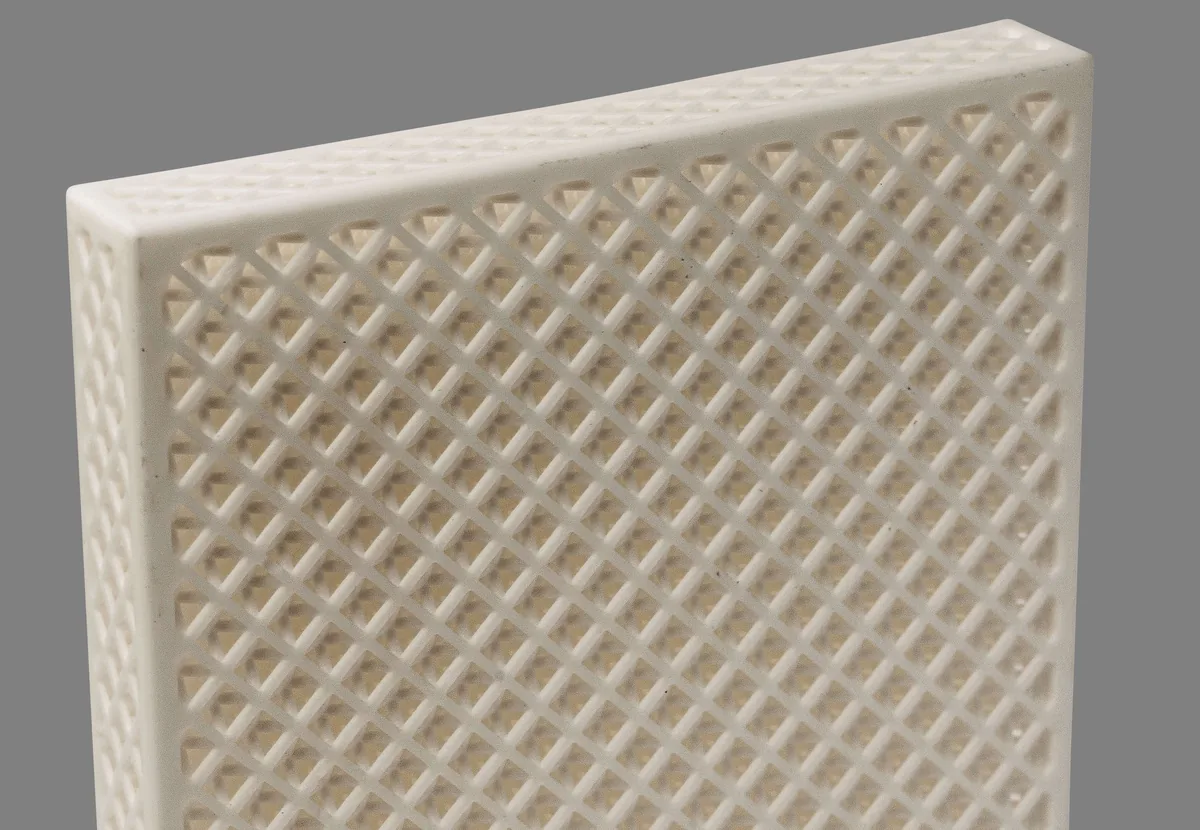
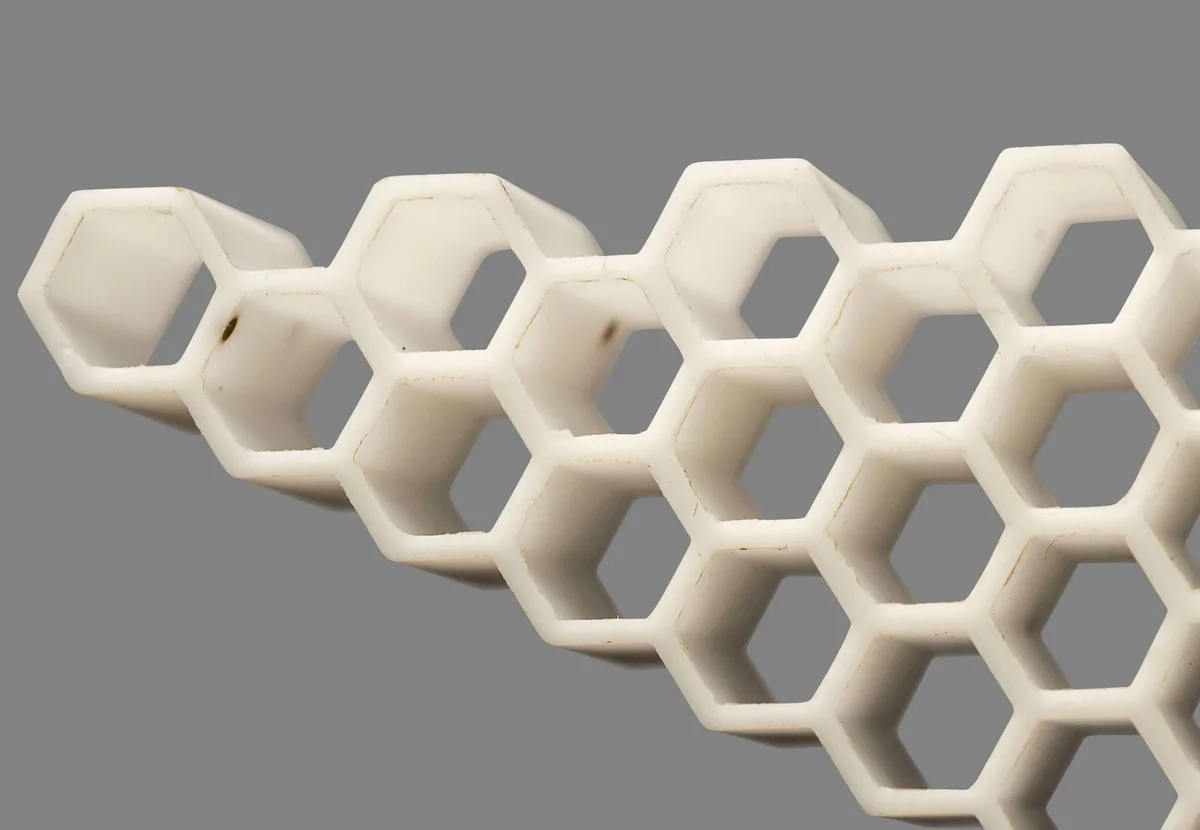
- Heat-exchange and lattice structures
- Vacuum and cleanroom components
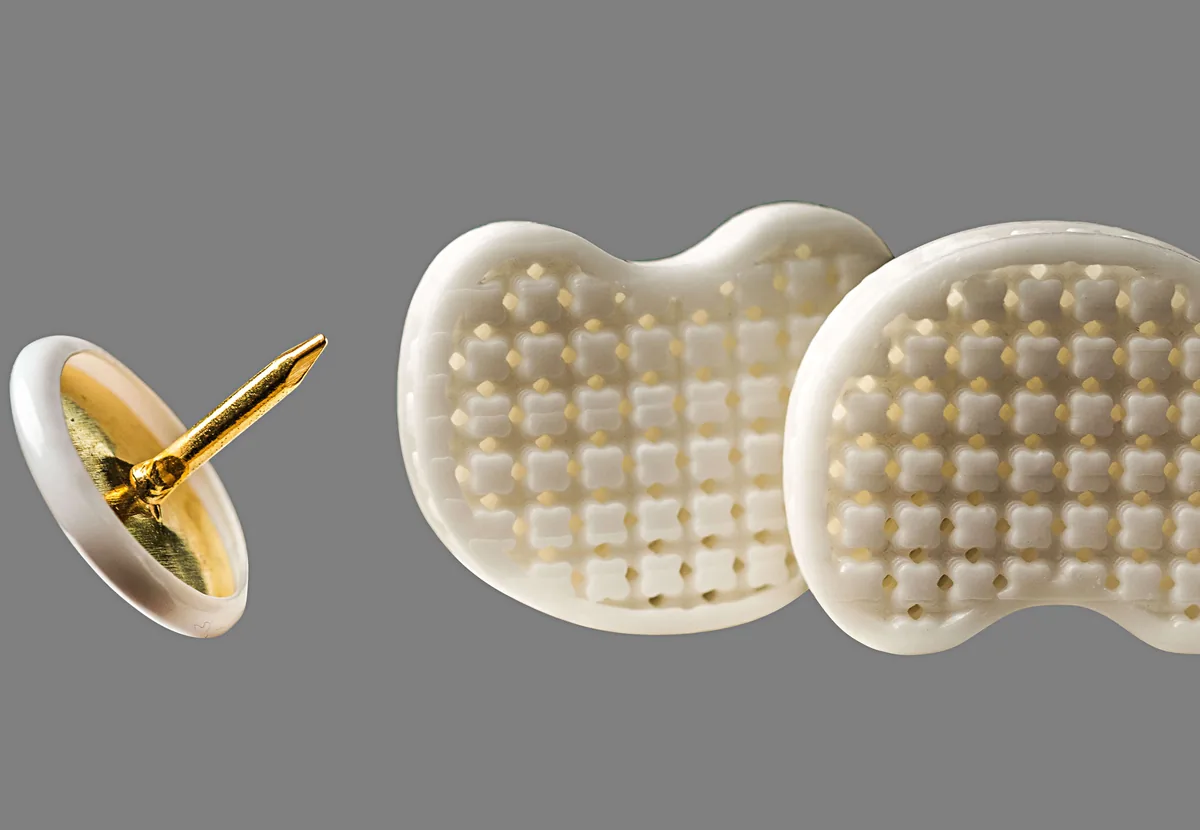
- Filters and catalyst carriers
Used in: Semiconductor equipment, Energy and chemical processing, Electronics and microfluidics, Aerospace and space
Print your part in alumina
Share a STEP file or drawing. An engineer reviews it, suggests a material and replies with a quote. We sign your NDA first if you need one.