
Hydroxyapatite 3D printing
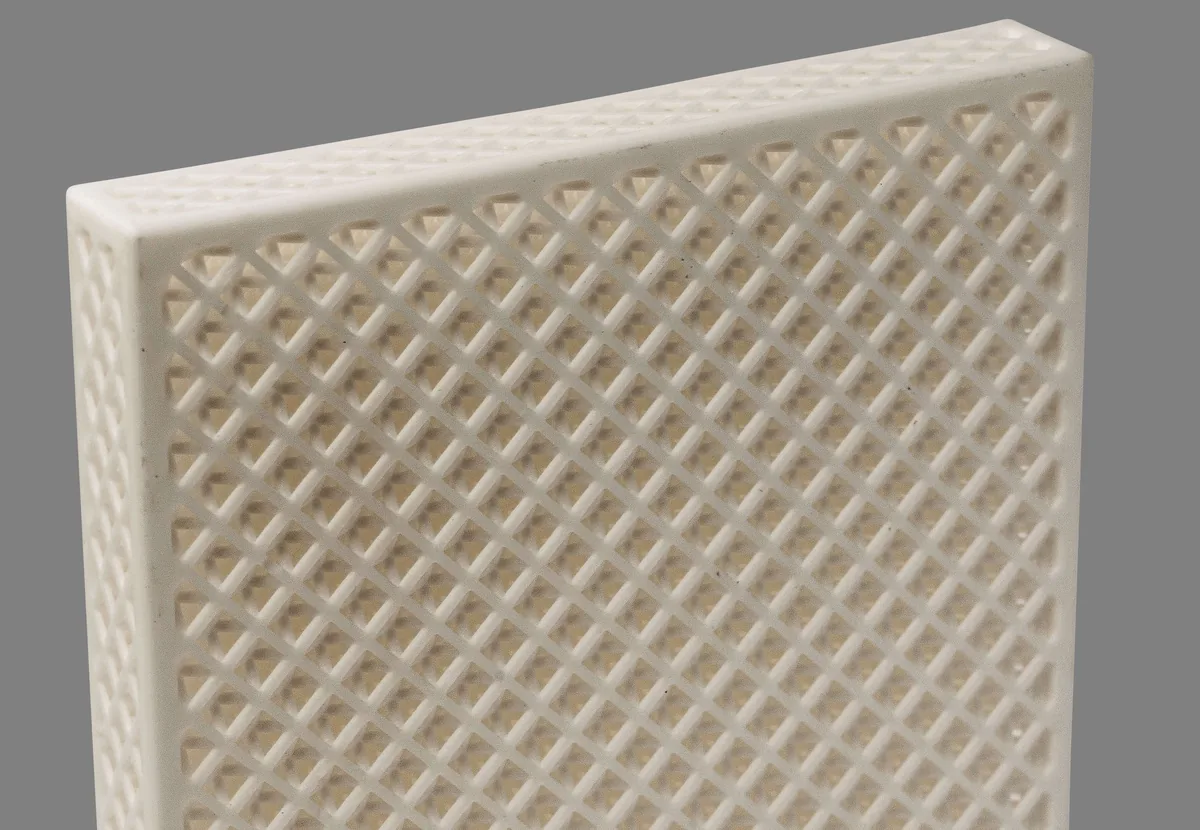
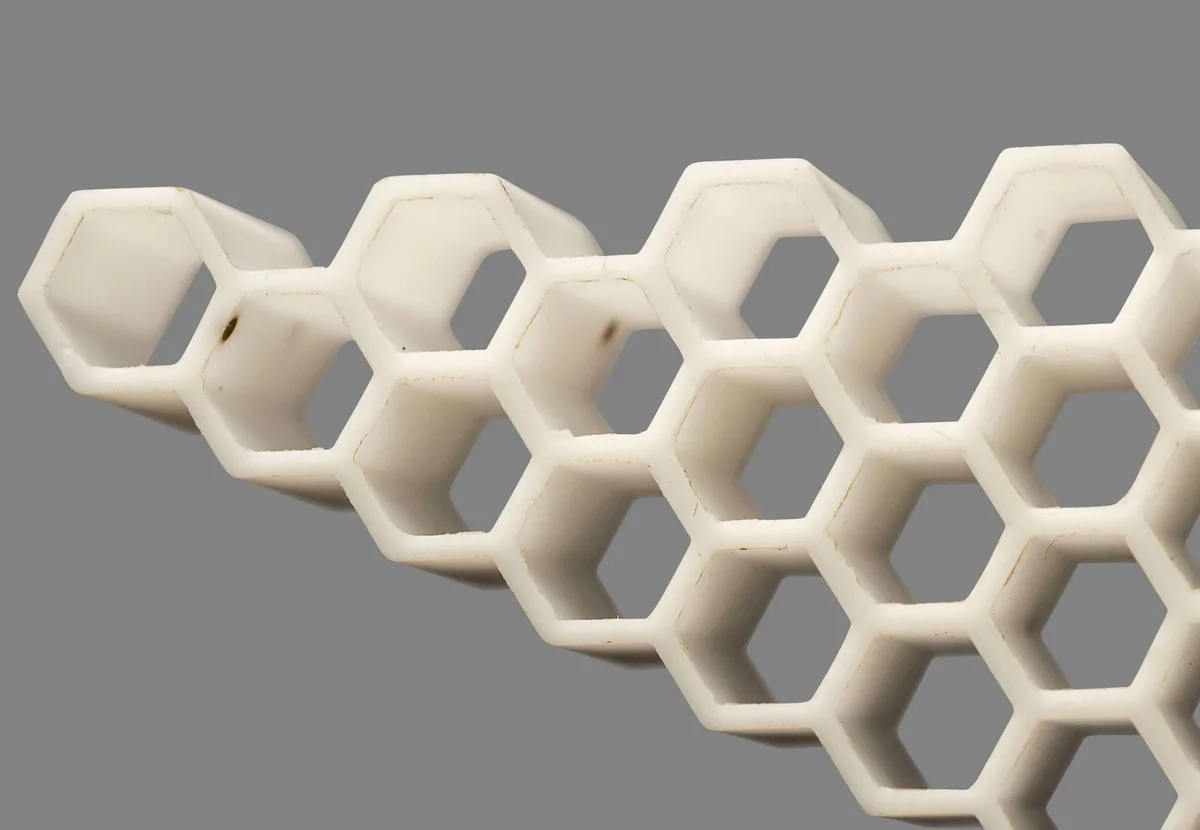
Hydroxyapatite has a chemical composition close to the mineral phase of bone. Printed as porous scaffolds with controlled pore size and connectivity, it is studied and used for bone graft substitutes and implant research.
Ca₁₀(PO₄)₆(OH)₂ (HAP)
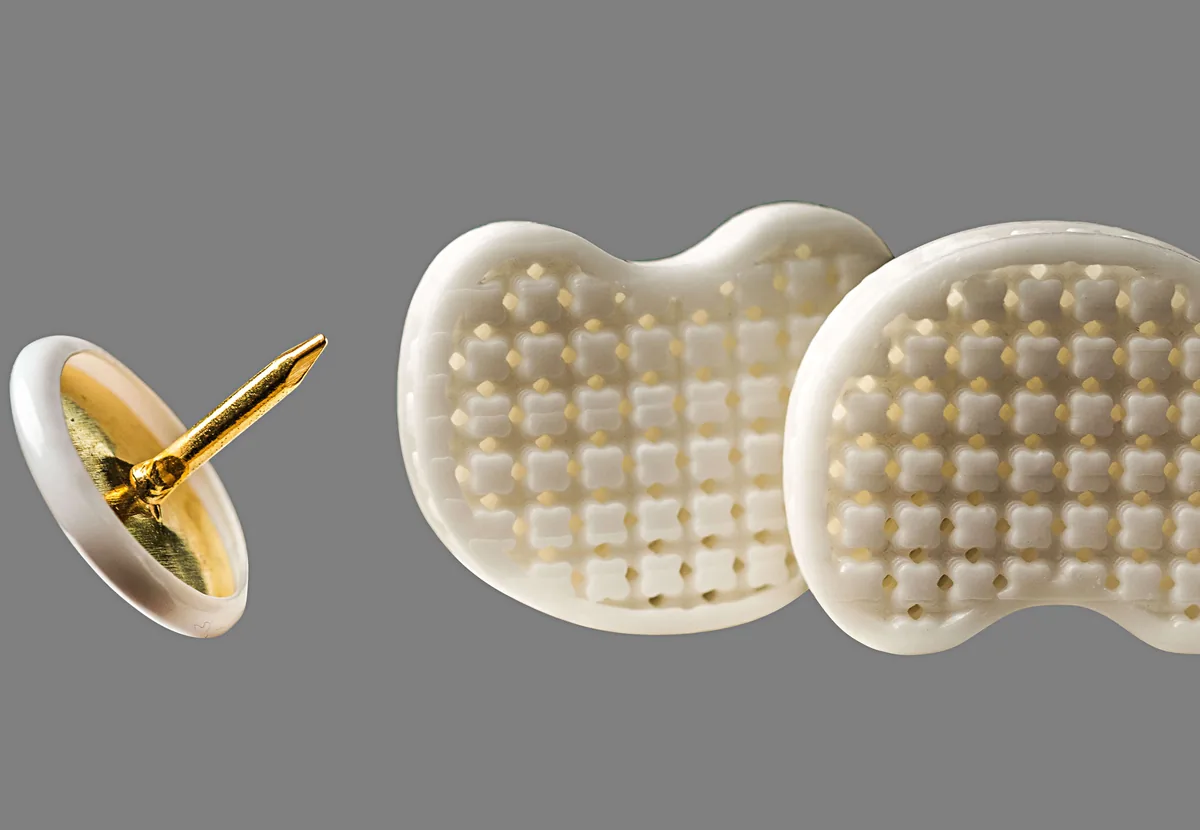
Why engineers choose hydroxyapatite
- Composition close to bone mineral
- Porosity and pore geometry can be designed
- Patient-specific shapes from CT data
Design with care for
- Low mechanical strength compared with technical ceramics
- Medical use requires the device manufacturer’s regulatory route
Typical properties
| Density (g/cm³) | 3.16 |
|---|---|
| Flexural strength (MPa) | 40–100 |
| Vickers hardness (GPa) | ≈5 |
| Fracture toughness (MPa·m½) | ≈1 |
| Thermal conductivity (W/m·K) | ≈1.3 |
| Thermal expansion (10⁻⁶/K) | ≈13 |
| Electrical behavior | Insulator |
Typical values for the material class, for orientation. Z3Dlabs hydroxyapatite datasheet (PDF)
Typical parts
- Bone scaffold research and development
- Patient-specific implant prototypes
- Cell-culture and test structures
Used in: Medical devices
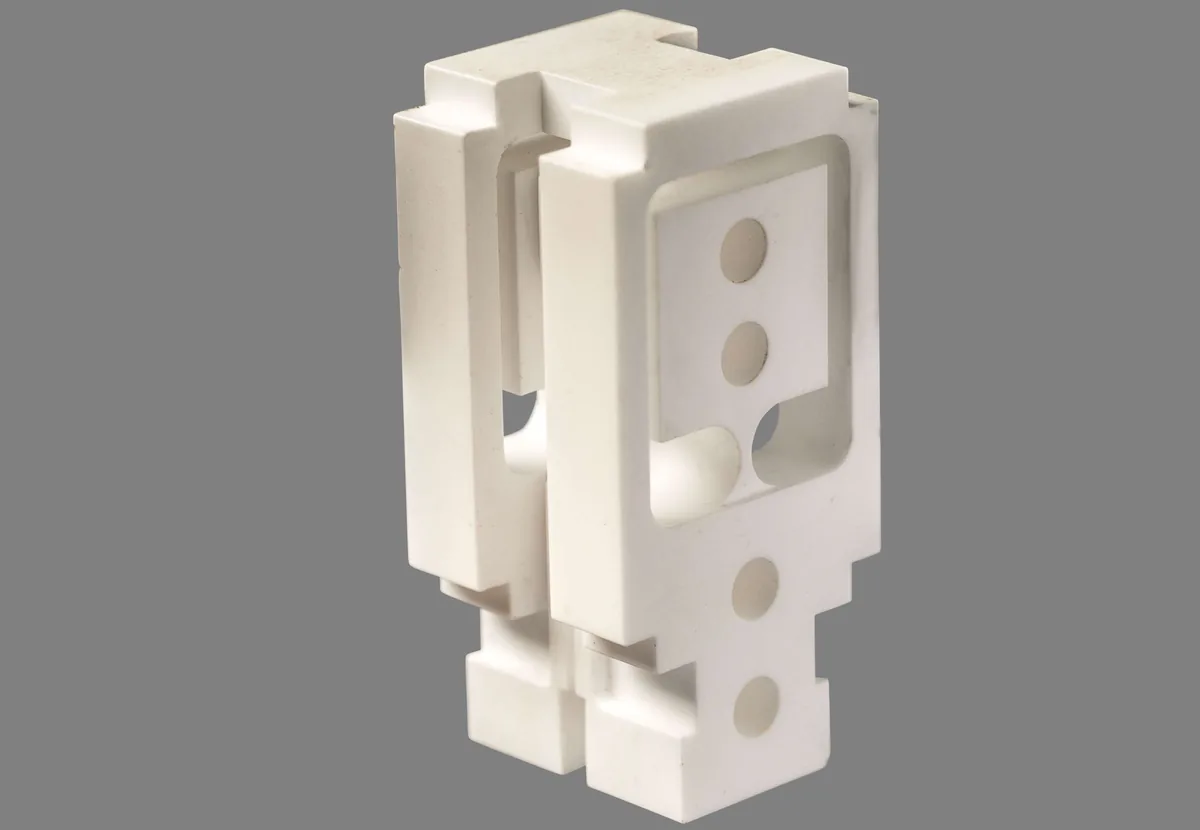
Print your part in hydroxyapatite
Share a STEP file or drawing. An engineer reviews it, suggests a material and replies with a quote. We sign your NDA first if you need one.