
Cordierite 3D printing
Cordierite expands far less with temperature than other ceramics or metals. That makes it the material of choice where dimensional stability matters across temperature swings, and where parts must survive thermal shock.
2MgO·2Al₂O₃·5SiO₂
Why engineers choose cordierite
- Very low coefficient of thermal expansion
- High thermal shock resistance
- Low thermal conductivity
- Suitable for vacuum applications
Design with care for
- Lower strength than alumina and zirconia
- Design generous wall thicknesses for load-bearing parts
Typical properties
| Density (g/cm³) | 2.5 |
|---|---|
| Flexural strength (MPa) | 100–200 |
| Vickers hardness (GPa) | 7–8 |
| Fracture toughness (MPa·m½) | 1.5–2.5 |
| Thermal conductivity (W/m·K) | 2–4 |
| Thermal expansion (10⁻⁶/K) | 1–2.5 |
| Electrical behavior | Insulator |
Typical values for the material class, for orientation. Z3Dlabs cordierite datasheet (PDF)
Typical parts
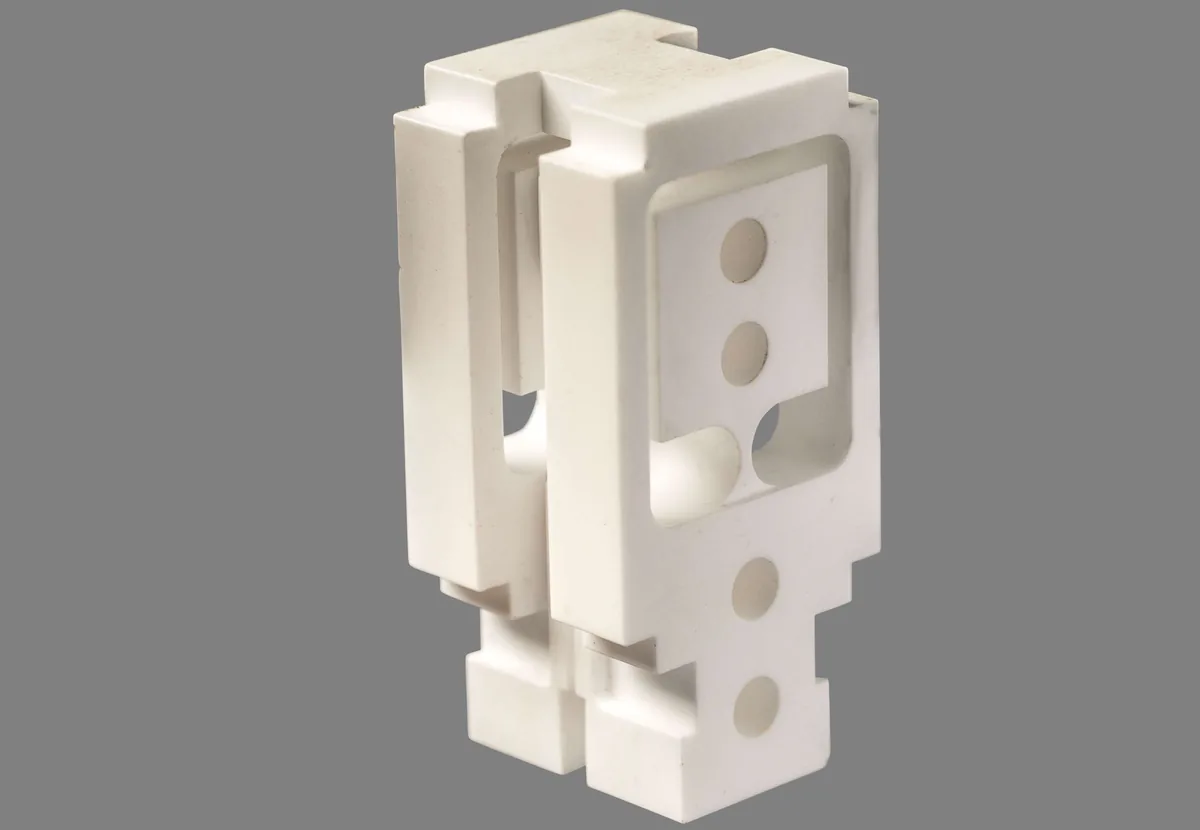
- Metrology frames and fixtures
- Optical mounts
- Thermal-shock-resistant supports
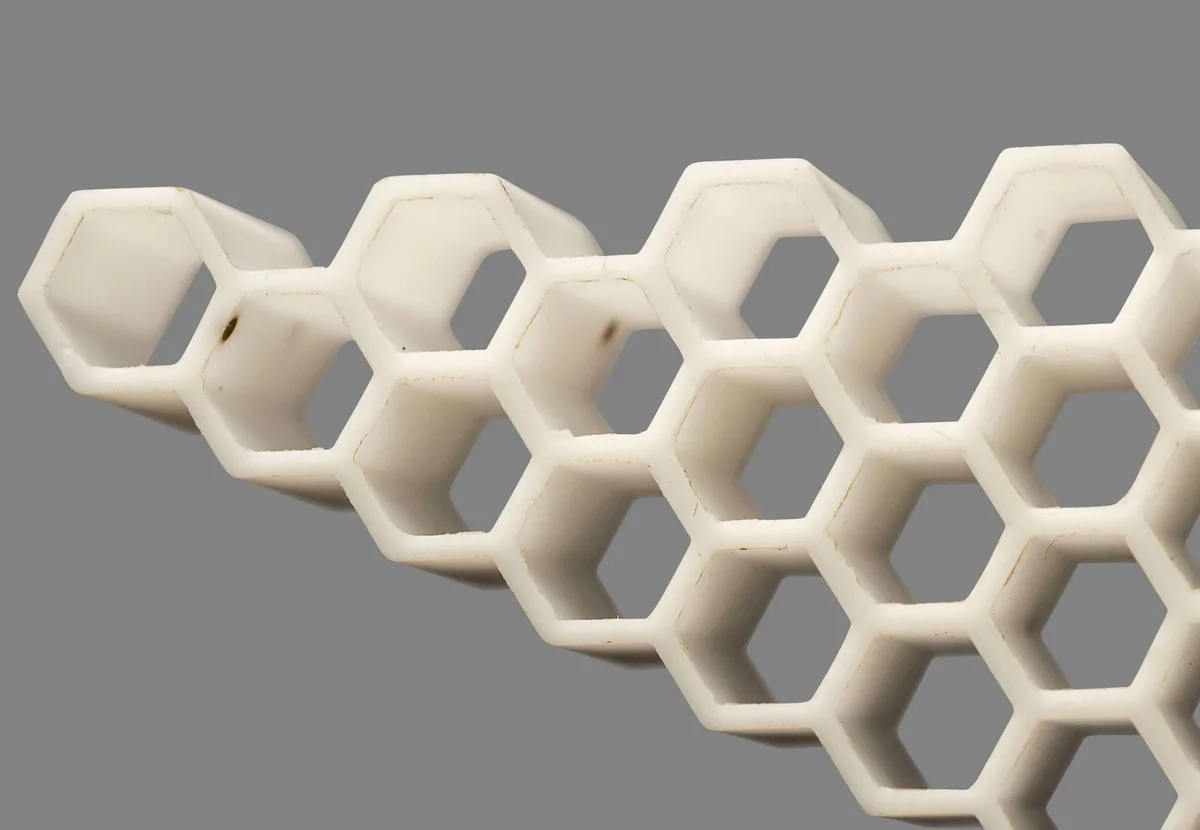
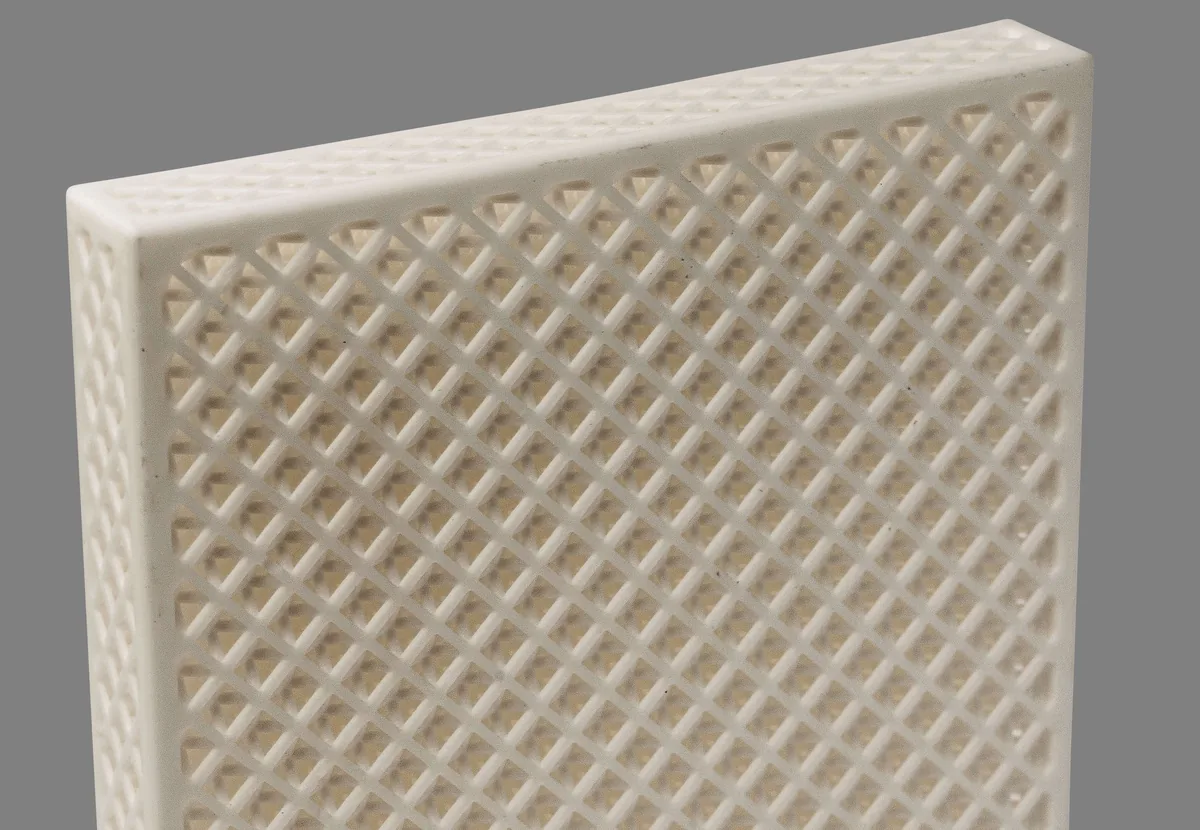
- Lightweight lattice structures
Used in: Metrology and optics, Aerospace and space, Semiconductor equipment
Print your part in cordierite
Share a STEP file or drawing. An engineer reviews it, suggests a material and replies with a quote. We sign your NDA first if you need one.