
Zirconia 3D printing
Yttria-stabilized zirconia has the highest strength and fracture toughness of the oxide ceramics. It suits mechanical parts that see load, wear and thermal cycling, and it can be colored, which makes it popular for visible components.
ZrO₂, yttria stabilized (3Y-TZP)
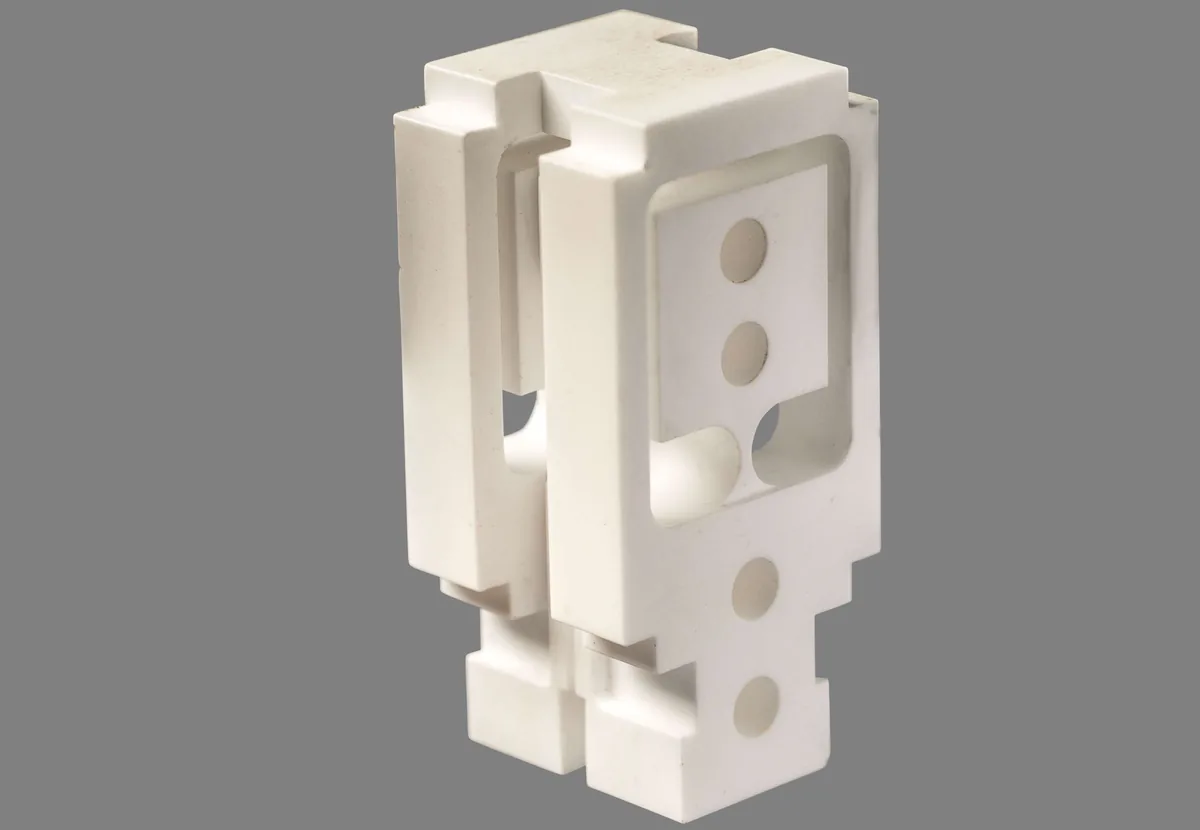
Why engineers choose zirconia
- High strength and fracture toughness
- Excellent wear resistance and smooth surfaces
- Low thermal conductivity, useful as a thermal barrier
- Biocompatible grades available
Design with care for
- Heavier than alumina
- Can age in hot, humid environments; ask us about your operating conditions
Typical properties
| Density (g/cm³) | 6.0 |
|---|---|
| Flexural strength (MPa) | 800–1200 |
| Vickers hardness (GPa) | 12–13 |
| Fracture toughness (MPa·m½) | 5–10 |
| Thermal conductivity (W/m·K) | 2–3 |
| Thermal expansion (10⁻⁶/K) | 10–11 |
| Electrical behavior | Insulator at room temperature |
Typical values for the material class, for orientation. Z3Dlabs zirconia datasheet (PDF)
Typical parts
- Mechatronic and precision mechanical parts
- Bearings, valve seats and nozzles
- Cutting and wear edges
- Medical and dental components
Used in: Semiconductor equipment, Medical devices, Metrology and optics, Aerospace and space
Print your part in zirconia
Share a STEP file or drawing. An engineer reviews it, suggests a material and replies with a quote. We sign your NDA first if you need one.