
Materials
Four technical ceramics for parts that must survive heat, wear, voltage or the human body, and precision resins for fast prototypes and micro-features.
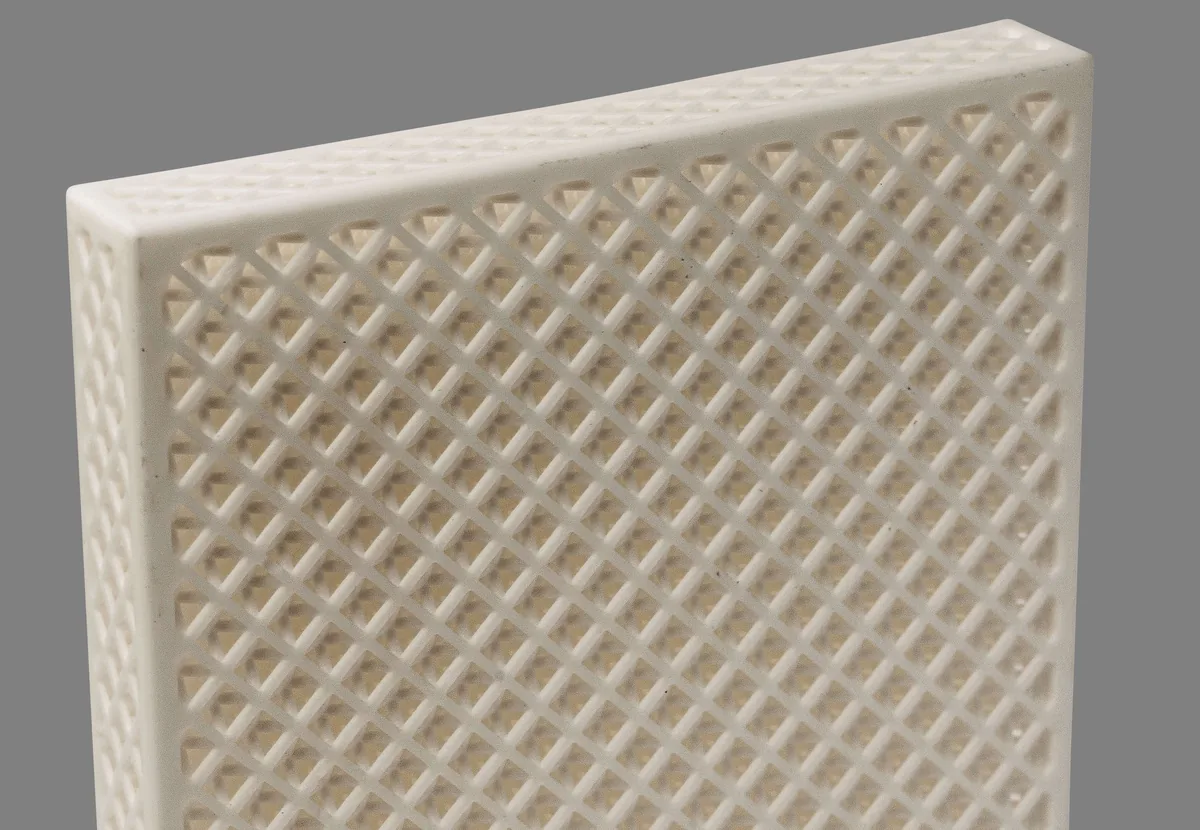
Alumina
Hard, electrically insulating and stable at high temperature.
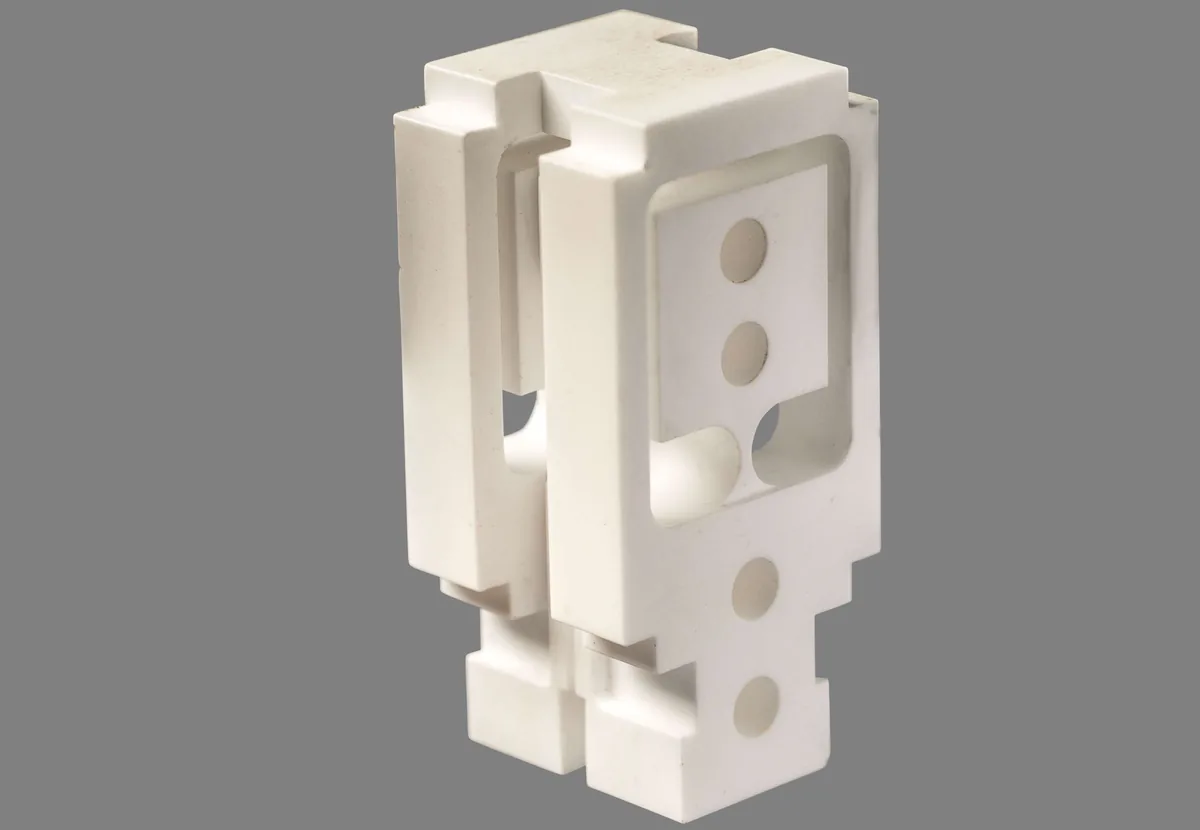
Zirconia
The toughest oxide ceramic, for parts that carry load.
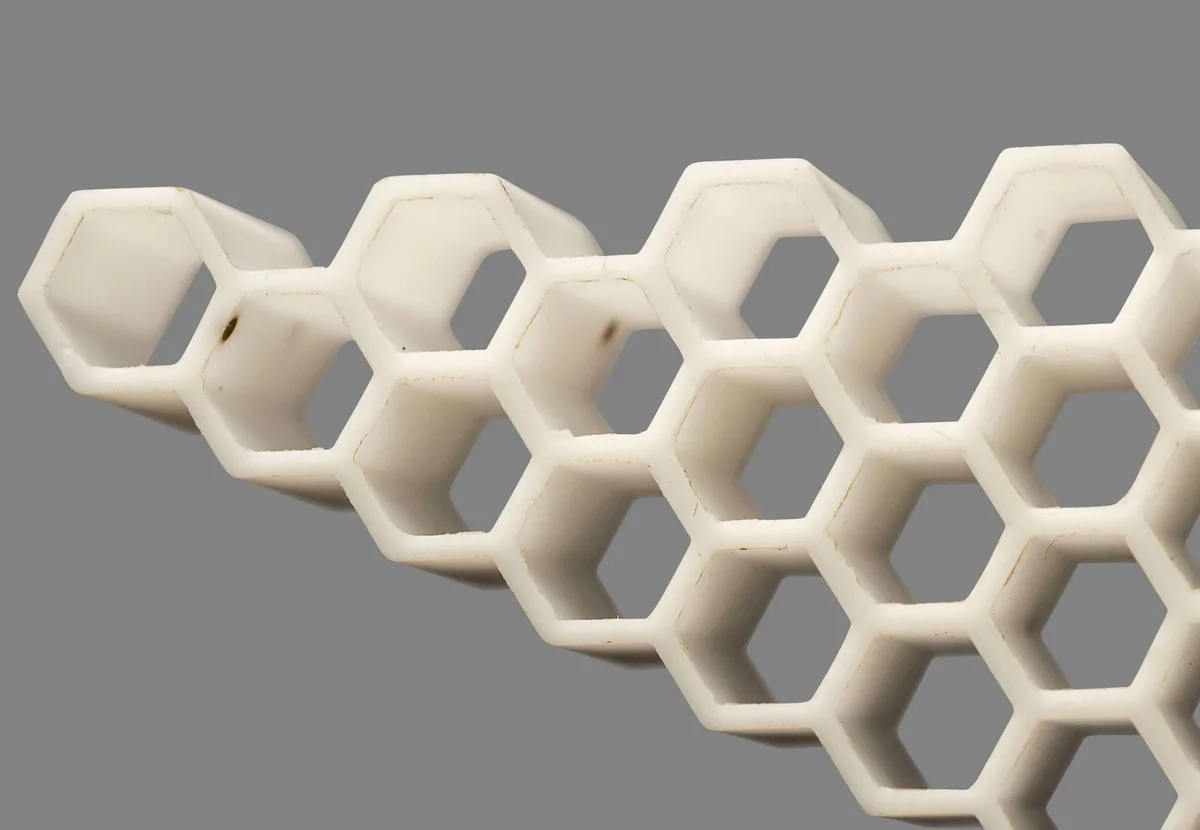
Cordierite
Very low thermal expansion for parts that must hold their shape.
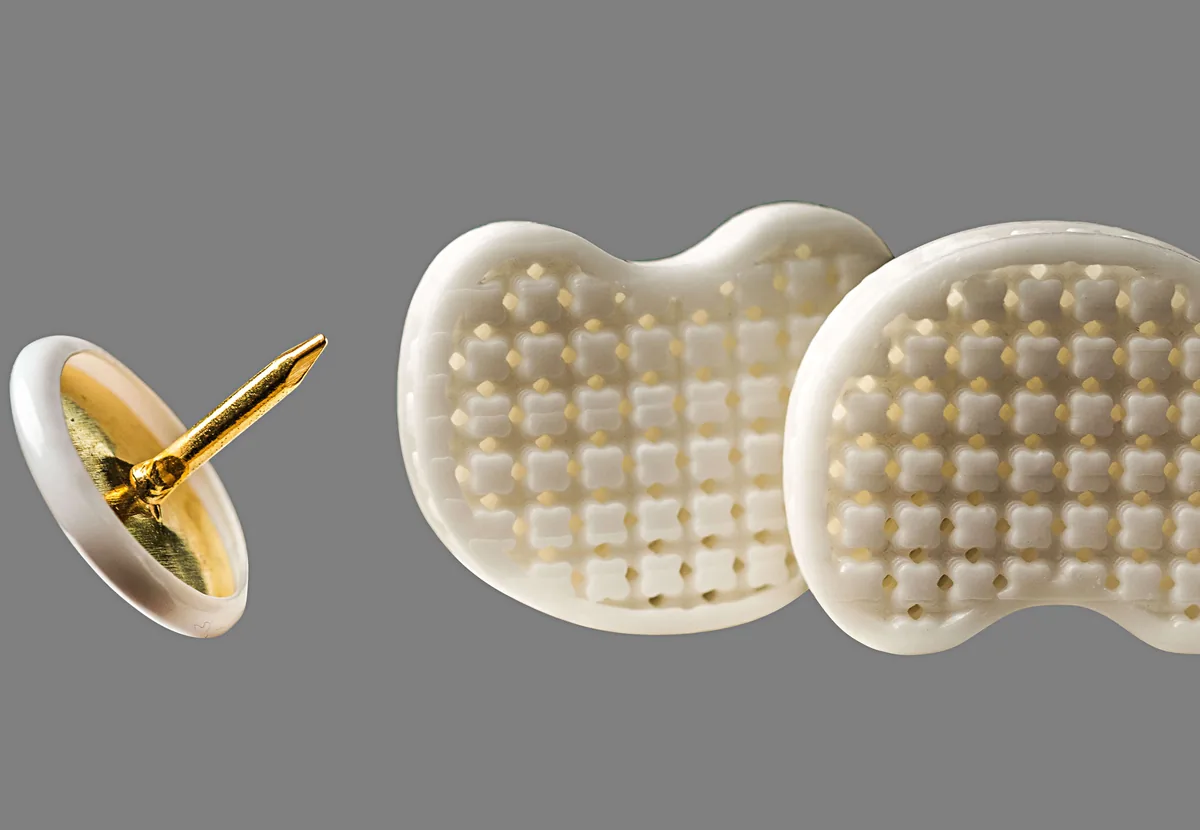
Hydroxyapatite
A calcium phosphate close to the mineral in human bone.
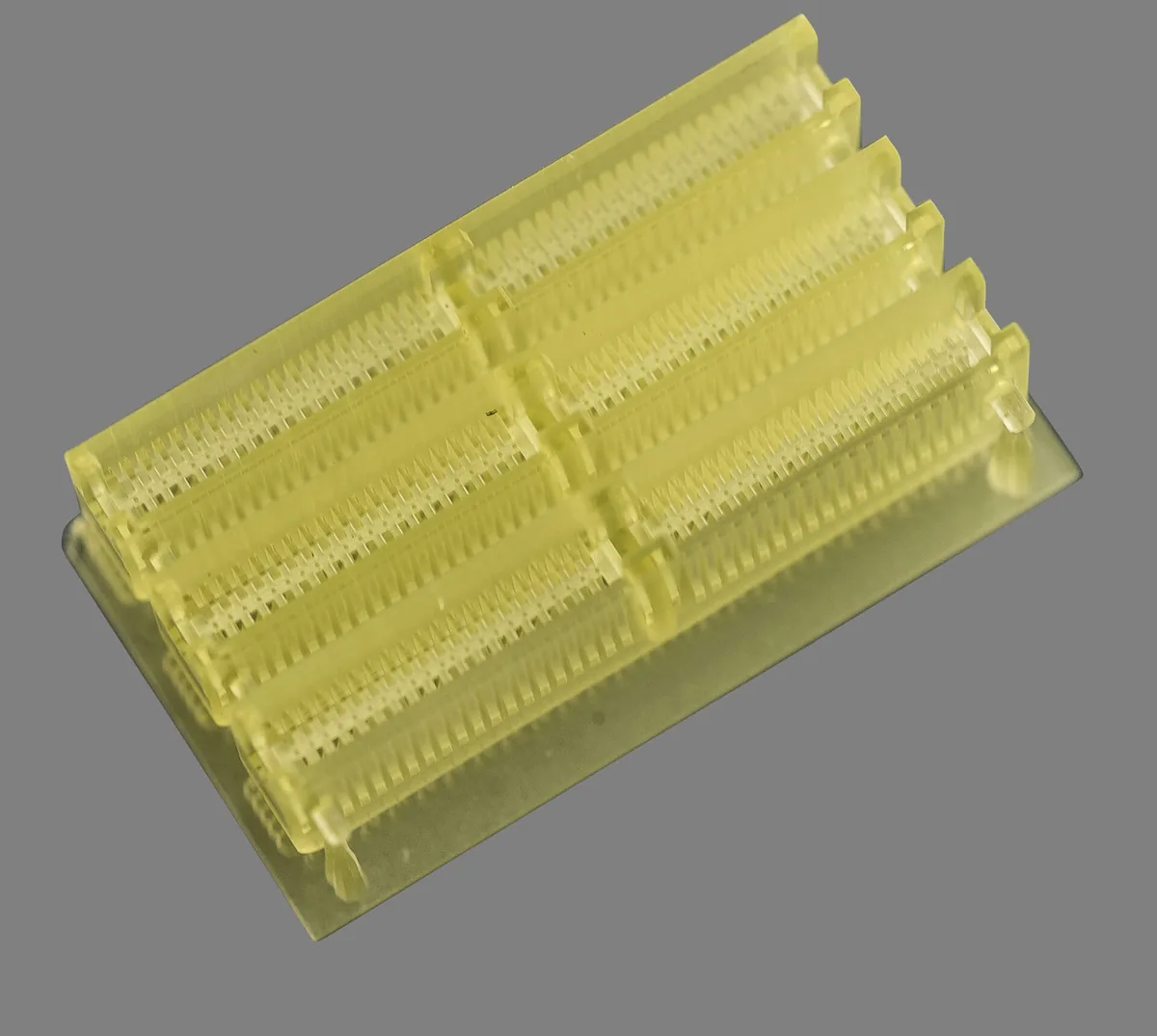
Precision resins
Fast prototypes and micro-precision polymer parts.
Compare the ceramics
Typical values for each material class from the technical literature, for orientation. Measured values for Z3Dlabs parts are in the datasheets.
| Property | Alumina | Zirconia | Cordierite | Hydroxyapatite |
|---|---|---|---|---|
| Density (g/cm³) | 3.9 | 6.0 | 2.5 | 3.16 |
| Flexural strength (MPa) | 300–450 | 800–1200 | 100–200 | 40–100 |
| Vickers hardness (GPa) | 15–18 | 12–13 | 7–8 | ≈5 |
| Fracture toughness (MPa·m½) | 3–4 | 5–10 | 1.5–2.5 | ≈1 |
| Thermal conductivity (W/m·K) | 25–35 | 2–3 | 2–4 | ≈1.3 |
| Thermal expansion (10⁻⁶/K) | 7–8 | 10–11 | 1–2.5 | ≈13 |
| Electrical behavior | Insulator | Insulator at room temperature | Insulator | Insulator |
| Choose it for | Electrical insulation and high dielectric strength | High strength and fracture toughness | Very low coefficient of thermal expansion | Composition close to bone mineral |
Printed parts can differ from these values depending on density, geometry and finishing. replace with measured Z3Dlabs datasheet values
Not sure which material fits?
Start from what the part has to survive.
Heat and electrical insulation
Alumina is the default choice.
Load, wear and impact
Zirconia has the highest toughness of the oxide ceramics.
Dimensional stability across temperature
Cordierite barely expands.
Contact with bone
Hydroxyapatite is close to bone mineral.
Speed and micro-features
Precision resins for prototypes and small parts.
Ask an engineer which material to use
Tell us the temperature, loads, chemistry and electrical needs. We recommend a material and explain the trade-offs.